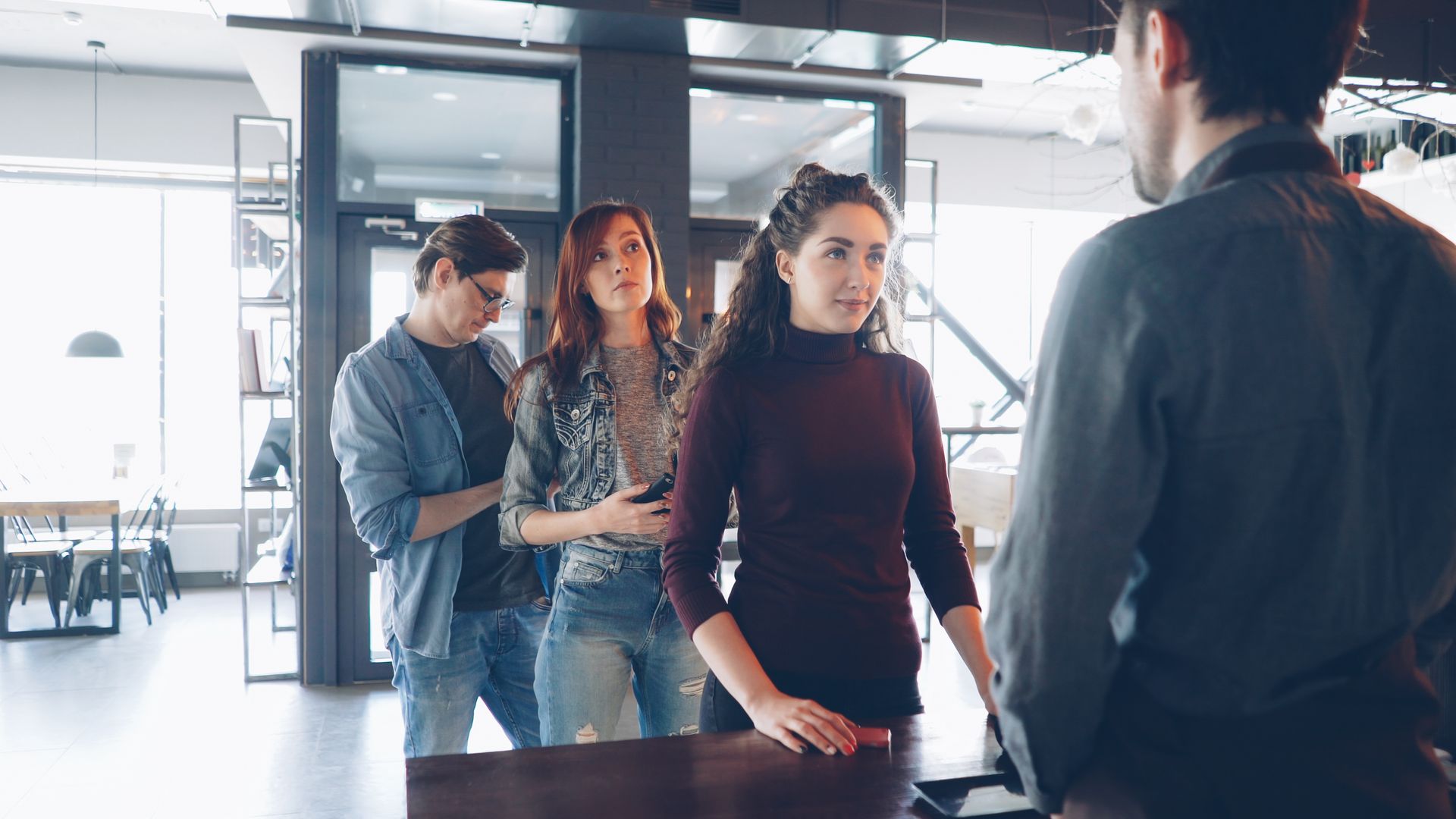
Every coffee shop owner knows the shape of a Tuesday. Quiet at seven, a trickle at half past, then between 8:00 and 9:15 the whole day's rhythm is decided. Get that ninety minutes right and the rest is comfortable. Get it wrong and you spend until eleven catching up.
The part that rarely gets measured is what the queue itself costs you.
The seventh person walks
Watch your own door during the rush. When the line reaches five or six, a proportion of people glance in, do the mental maths against the train they need to catch, and keep walking. They do not complain and they do not come back later — they buy their coffee somewhere else and, more often than not, they keep buying it there.
If six people a day walk past at an average of £4.20, that is roughly £25 a day. Over a six-day week, across a year, that is a shade over £7,800 of coffee you already had the beans, the milk and the staff to make.
The barista is doing two jobs
The second cost is quieter. During a rush, whoever is on the machine is usually also taking the order, repeating it back, ringing it into the till, taking payment and calling it out. Every one of those interruptions pulls them off the group head.
Espresso does not tolerate distraction well. A shot pulled while somebody is trying to remember whether they wanted oat or almond is not the shot you dialled in that morning. Consistency is the thing regulars come back for, and the rush is exactly when it slips.
What actually shortens a line
There are only three real levers: serve faster, take orders earlier, or take fewer orders at the counter. Most shops try the first, buy a second grinder, and find the bottleneck simply moves.
The other two are where the gains are:
- Order ahead. A commuter orders from the platform and collects on the walk in. They were never in the queue to begin with, and the order arrives at a moment you choose to look at it.
- QR at the table. Sit-in customers order and pay from their seat. They never stand up, and the counter is left for the people who genuinely want to stand at it.
- Pavement tables. The hardest ones to serve become the easiest — no more counting heads through the window.
The screen does the talking
When an order arrives on a barista screen instead of across a counter, three things change at once. The order is written down, so it is right. It is timed, so you can see what is coming. And nobody has to shout.
Most shops we speak to expect the technology to feel like a change to how they work. In practice the change is smaller and better than that: the machine gets someone's full attention again.
Try it on one rush
You do not have to commit to anything to find out whether this helps. Put codes on the tables, keep the till exactly as it is, and see how much of the queue quietly moves onto phones during a single Saturday. If it does not help, you have lost nothing but the price of printing some cards.